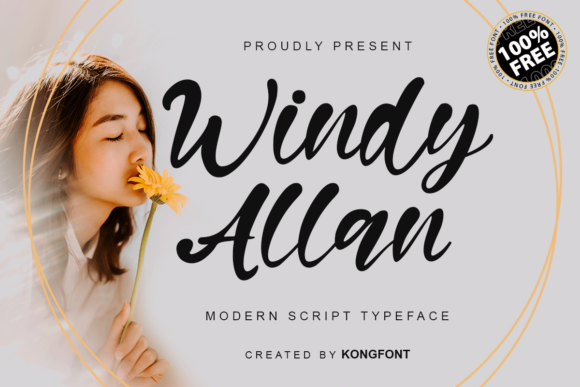
Windy Allan: The Authentic Script Font for Small Business Branding
Running a small business means wearing many hats. You are the CEO, the marketer, the designer, and often the customer service rep. In this whirlwind of daily operations, visual consistency is one of the hardest things to maintain, yet it is crucial for building trust. One of the most impactful, yet overlooked, elements of brand identity is typography. When you choose the right script font, you aren’t just picking letters; you are setting the tone for how customers perceive your quality and personality.
This is where Windy Allan comes in. As a trendy and authentic script typeface, it offers the perfect blend of approachability and professionalism. Whether you are designing a logo for a new boutique, creating labels for handmade candles, or updating your social media graphics, Windy Allan provides the visual weight and character needed to make your brand stand out without looking chaotic. For entrepreneurs looking for high-quality freebies in the world of fonts, this typeface is a practical asset that can elevate your entire brand identity.
Why Windy Allan Fits Modern Business Needs
The market is saturated with generic templates and overused design assets. To cut through the noise, your brand needs a distinct voice. Windy Allan captures a mood that is both modern and timeless. It feels handwritten but polished, avoiding the messy or overly ornate pitfalls that can make text difficult to read. This balance is critical for small businesses because it signals reliability. A clean, well-executed script suggests that you pay attention to detail—a trait every customer looks for when deciding whether to buy from you.
Unlike rigid corporate sans serif fonts, Windy Allan brings warmth. It works exceptionally well for brands that want to feel personal and connected. Think about the difference between a sterile medical clinic’s signage and a cozy, independent café’s menu. The latter benefits from typography that feels crafted by human hands. Windy Allan delivers that "handcrafted" aesthetic while maintaining the structural integrity needed for professional marketing materials. It is versatile enough to serve as a primary display font for headlines while remaining legible enough for supporting text if used correctly.
Real-World Applications for Your Brand Touchpoints
Typography is not just about what goes on your website; it is about every physical and digital touchpoint a customer encounters. Here is how Windy Allan can transform specific business materials:
- Logo Design: For service providers like coaches, photographers, or consultants, a script logo can convey creativity and empathy. Windy Allan’s fluid strokes create a memorable mark that looks great on letterheads and email signatures.
- Packaging and Labels: If you sell physical products, such as skincare, baked goods, or artisanal gifts, your packaging is your silent salesperson. Using Windy Allan for product names or taglines adds an upscale, boutique feel. It stands out on shelves and in unboxing videos, which are vital for social proof.
- Social Media Graphics: On platforms like Instagram and Pinterest, text overlays compete for attention. A bold, expressive creative font like Windy Allan ensures your quotes, announcements, and promotional offers are instantly readable even at small sizes on mobile screens.
- Digital Ads and Banners: When running paid campaigns, clarity is king. Windy Allan works well as a headline font in ad creatives, drawing the eye before the user reads the call-to-action. Its authentic style helps ads feel less like intrusive advertisements and more like curated content.
- Business Cards and Stationery: First impressions matter. Printing Windy Allan on high-quality cardstock for business cards or thank-you notes included in orders reinforces a premium brand experience. It shows you care about the tactile interaction with your client.
Strategic Font Pairing for Cohesive Design
While Windy Allan is powerful on its own, using it effectively often requires pairing it with complementary typefaces. Good font pairing creates hierarchy and ensures readability across different mediums. The golden rule of typography is contrast: pair a decorative font with a simple, neutral one.
For instance, you might use Windy Allan for your main headlines or logo, paired with a clean sans serif font for body text. This combination is ideal for websites and long-form marketing emails, where readability is paramount. The sans serif provides a stable foundation, allowing the script to shine as the accent without overwhelming the reader. Alternatively, pairing Windy Allan with a classic serif font can evoke a sense of tradition and elegance, perfect for luxury goods, wedding services, or high-end hospitality brands.
When designing your brand guidelines, establish clear rules. Use Windy Allan sparingly for maximum impact. Reserve it for short phrases, titles, and key messages. Avoid using it for paragraphs of text, as the intricate details of the script can become fatiguing to read. By limiting its use, you ensure that every time a customer sees Windy Allan, they associate it with importance and quality.
Readability and Practical Testing
Before committing to Windy Allan for your entire brand suite, it is essential to test its performance in real-world scenarios. A font may look beautiful on a large monitor but fail completely when printed on a tiny product label. Test your designs at various sizes. Check how Windy Allan appears on mobile devices, where screen space is limited. Ensure that the curves and connections in the letters remain distinct and do not blur together.
Also consider the context of your industry. While Windy Allan is versatile, it leans towards creative, lifestyle, and service-oriented sectors. It might be too informal for a law firm or a financial institution. However, for a bakery, a yoga studio, a handmade jewelry shop, or a freelance graphic designer, it strikes the right chord. Always ask yourself: Does this font reflect my target audience’s expectations? If your customers value authenticity and warmth, Windy Allan is likely a strong fit.
Licensing and Commercial Use Considerations
As a savvy business owner, protecting your intellectual property and respecting others’ rights is non-negotiable. Even though Windy Allan is available as a freebie in many fonts repositories, you must always verify the specific license attached to it. Not all free fonts allow for commercial use without attribution or additional fees.
Check whether the license permits use in logos, merchandise, and digital downloads. Some licenses restrict the number of impressions or require you to purchase a commercial license if your revenue exceeds a certain threshold. Taking the time to review these terms prevents legal issues down the road. If the font allows broad commercial use, you can confidently apply it to t-shirts, mugs, packaging, and client work without worry. If restrictions exist, budget for a proper commercial license—it is a small investment compared to the risk of a cease-and-desist order.
Building Trust Through Consistent Typography
Ultimately, choosing Windy Allan is about more than aesthetics; it is about strategic communication. Consistency builds recognition. When your logo, website, social posts, and packaging all speak the same visual language, customers begin to trust your brand. They know what to expect. In a crowded marketplace, that trust is your competitive advantage.
By integrating Windy Allan into your design toolkit, you add a layer of sophistication and personality that resonates with modern consumers. It helps you look established, thoughtful, and professional, regardless of your business size. Start small—update your social media headers or redesign your product tags—and observe how the shift in typography influences customer engagement. In the world of branding, the smallest details often make the biggest difference.